Showing posts with label Tsaghkadzor. Show all posts

Tuesday, January 31, 2012

Fascinating Tsaghkadzor, Armenia; Image Gallery


Kecharis (Armenian: Կեչառիս) is a 11-13th-century monastery, located 60 km from Yerevan, in the ski resort town of Tsakhkadzor in Armenia. Nestled in the Bambak mountains, Kecharis was founded by a Pahlavuni prince in the 11th century, and construction continued until the middle of the 13th century. In the 12th and 13th centuries Kecharis was a major religious center of Armenia and a place of higher education. Today the monastery has been fully restored and is clearly visible from the ski slopes.

Badly damaged in an earthquake of 1927, reconstruction was not begun by the Armenian SSR until the 1980s. A series of nationwide problems led to a halt in reconstruction for about a decade as the 1988 Leninakan Earthquake hit, the Soviet Union collapsed in 1991, the Nagorno-Karabakh War broke out, and Armenia was blockaded by its two Turkic neighbors. As Armenia recovered slowly from these catastrophes, the reconstruction of Kecharis finally resumed in 1998 and finished in 2000 thanks to a donation by an Armenian benefactor from Vienna named Vladimir Harutyunian, in memory of his parents Harutyun and Arsenik.


The gavit, built in the second half of the 12th century and attached to the western facade of S. Grigor church, is an early structure of this type. The rectangular hall is divided into nine sections by four heavy free-standing columns.

The eastern corners of the interior are taken up by small two-storey annexes which first appeared in this form in this gavit.

The architectural details of the building are rather modest. The small windows are topped by profiled edges above which there are, in the middle window of the southern facade, octafoil rosettes and sun dials, widespread in Armenia and, on the western facade, jugs. As distinct from the portals of the churches, the only western entrance is built as a rectangular opening with a niche framed with bunches of small columns and an arch. In the interior, the fine geometrical ornaments on the capitals of the columns and on the cornice of the tent base immediately catch the eye.

The Katoghike (Cathedral) church stands south of S. Nshan, with a narrow passage dividing them. Judging by an inscription, it was built under Prince Vasak Khakhpakyan of the Proshyan clan (in the first quarter of the 13th century) by the architect Vetsik, in whose memory a khachkar, ornamented with highly artistic carving, was put up a little south of the church.

The Katoghike church belongs to the cross-winged domed type and has two-story annexes in all the four corners of the prayer hall. The entrances to the upper eastern annexes are from the side of the altar apse. Stone cantilever stairs lead to the western annexes of the first floor.

The character of Katoghike church's decoration is connected with the artistic traditions of the time when it was built. The round cupola drum was destroyed by earthquake in 1927 (also rebuilt in by 2000), and is decorated with a 12-arch arcature. The front wall of the altar has carved khachkar-type crosses, and there are rosettes on the walls and on the spherical pendentives of the cupola where they alternate with flat arch motives.


The church of Harutyun (Resurrection), standing on a forest glade, away from the main group, was built by a son of Hasan in 1220. This is a small, outwardly rectangular domed-hall church with a lofty cupola. The only entrance, with a small vestry in front of it, is from the west. As distinct from the ordinary vestries, it has a vaulted ceiling, and is narrower than the church. A distinctive feature of the structure is that it has, on its western facade, twin openings topped with arches which rest on the wall-attached and intermediate columns. This gives the structure the appearance of an open passage. There are many graves in the church which was probably a family burial vault.

The main temple, the church of Saint Grigor, is the monastery's first structure erected by Grigor Magistros Pahlavuni in 1003. Being of a domed hall type, it is one of the typical church structures of the period of developed feudalism in Armenia. The interior of the temple is divided into three spaces by two pairs of wall-attached abutments. The central (and largest) space of the church is crowned by a broad cupola resting on spherical pendentives. The cupola and pendentives were destroyed by an earthquake in 1927, and reconstructed in 2000.

The semicircular altar apse has two-storey vestries on either side. Three triangular niches behind the altar provide openings for light. The sole of the altar has carved geometrical ornament, alternating with rosettes in places.


The church of Surb Nshan (Armenian: Սուրբ Նշան, "holy cross" in Armenian), situated south of the church of Grigor, is a small cross-winged domed structure built, judging by the type of the building and by architectural details, in the 11th century, probably soon after the church of S. Grigor.

The main temple, the church of Saint Grigor, is the monastery's first structure erected by Grigor Magistros Pahlavuni in 1003. Being of a domed hall type, it is one of the typical church structures of the period of developed feudalism in Armenia. The interior of the temple is divided into three spaces by two pairs of wall-attached abutments. The central (and largest) space of the church is crowned by a broad cupola resting on spherical pendentives. The cupola and pendentives were destroyed by an earthquake in 1927, and reconstructed in 2000.

The semicircular altar apse has two-storey vestries on either side. Three triangular niches behind the altar provide openings for light. The sole of the altar has carved geometrical ornament, alternating with rosettes in places.


Monday, January 30, 2012

Tsaghkadzor; a Fascinating Winter Resort City in Armenia

Tsaghkadzor (Armenian: Ծաղկաձոր, also Romanized as Tsakhkadzor; formerly, Darachichag) is a spa town and a popular health resort in Armenia located north of Hrazdan in the Kotayk Province (marz). The population of 1,600 in 2009, is a decrease of more than half of the 3,400 reported in the 1989 census.

Tsaghkadzor means valley of flowers in Armenian. The city is located 50 kilometers north of Yerevan, on the southeastern slope of Teghenis Mountains, at a height of 1750 meters above sea level, surrounded with alpine meadows.

History:

In the early medieval period the region belonged to the feudal clan of Varazhnuni, which governed the forest that was used as a hunting ground for the Armenian Arshakuni Kings from the 4th to the 5th centuries. In the 6th century, the territory passed into the possession of the House of Kamsarakan. Beginning from the 10th century, the clan of Kamsarakan merged with the House of Pahlavuni, who were also related to the Arshakunis. Gregory Pahlavuni, the leader of the clan and subsequently the prince of the Kecharis principality, built the Kecharis Monastery in honor of Gregory the Illumanitor in 1033. In 1051 he constructed the Church of Holy Nshan. The territory passed to the rule of Zakarid princes during the 13-14th centuries, at times falling to the rule of Proshyan and Khagbakyan families. During the larger part of the later centuries, the region was constantly the arena of the Ottoman-Persian wars. Finally in 1828, according to the Treaty of Turkmenchay, the region was connected with the Erivan Governorate and entered into the composition of the Russian Empire.
During the Soviet era Tsaghkadzor was developed into a modern city intended to attract large numbers of tourists. Many historical buildings and dachas, built before the revolution by industrialists and merchants from Yerevan and Tbilisi, were either nationalized in favor of the state or they were sold in auctions.

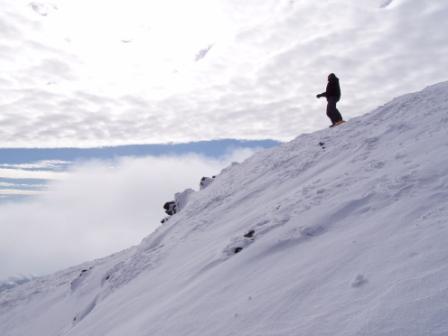
Currently, Tsaghkadzor is a fast developing winter resort that attracts hundreds of ski and snowboard enthusiasts from around the world. Many people choose this undiscovered destination to combine their snow experience with an extraordinary experience of touring the country in the wintertime. The best months for skiing and snowboarding are normally February and March. Usually, snow cover is good from January to mid-April.

On August 11, 2008, about 90 American Peace Corps volunteers, trainees and staff members were relocated to Tsaghkadzor from the Republic of Georgia as a precaution during the military conflict with Russia.
Cultural heritage:

One of the most interesting religious complexes of Armenia is located in Tsaghkadzor. The Kecharis Monastery of the 11th century is a group of 4 churches, and it is one of the well-preserved medieval architectural samples of the Armenian Highland.

The Orbeli brothers' house-museum in Tsaghkadzor is dedicated to the Armenian scientists Ruben, Levon and Joseph Orbeli who were native of Tsaghkadzor. Professor Ruben Orbeli was the founder of marine archaeology and one of the major specialists of ocean engineering. Physiologist Levon Orbeli was a member of the Academies of Science of USSR and Armenian SSR. Scientist Joseph Orbeli was an orientalist specialized in medieval history of Southern Caucasus, he administered the State Hermitage Museum in St. Petersburg from 1934 to 1951.

Tourism:

The infrastructure of tourism is highly developed in Tsaghkadzor, with many luxurious hotels, resorts and amusement facilities. The Tsakhkadzor ski resort is located just above the town, on a height of 1750 meters above sea level.
During the recent years the ski resort was fully modernized. All ropeway lifts are manufactured and operated by Leitner Group. The current structure replaced existing soviet era lifts, mostly following their path. There were initially three consecutive lifts stretching from the foot of the mountain (1969m above sea level) up till the mountain peak (2819m), with the first and second lifts ending at 2234m and 2465m above sea level respectively. In 2006 a fourth lift was added, stretching from the end of the first stage towards an opposite hilltop, thus adding two trails, both leading down to the foot of the slopes. Apart from the lifts the resort offers ski and snowboard rental as well as skiing instructors. The skiing season in Tsakhkadzor normally starts mid December and stretches well into March with the top slopes often fit for skiing in April.

The Olympic Sports Complex of Tsaghkadzor was built specifically for the preparation of the Soviet athletes for the 1968 Summer Olympic Games in Mexico. Today the sports complex which was thoroughly overhauled in 2008, opens its doors to all visitors. The complex provides training facilities for 35 types of sports. It consists of a football stadium, swimming and diving pools, a ski run piste, several indoor sport halls and facilities for many other types of sports.


Translate

Related Posts Plugin for WordPress, Blogger...

Labels

2014 (1) Abovyan (1) Afghanistan (29) Agarak Syunik (1) Agdam (2) Agsu (2) Akhtala (2) Al Manama (2) Alabama (2) Alaska (1) Alaverdi (2) America (10) Amsterdam (1) Aparan (2) Ararat (2) Arizona (1) Arkansas (1) Armavir (1) Armenia (53) Artashat (1) Artik (1) Asadabad (2) Ashtarak (2) Astara (1) Austria (1) Autauga County (1) Azerbaijan (58) B. Baria (2) Babek (1) Badakhshan (1) Badghis (1) Bagerhat (1) Bahrain (6) Baku (2) Balakan (2) Bamyan (2) Bandar Seri Begawan (2) Bandarban (2) Bangkok (4) Bangladesh (71) Barcelona (2) Barda (2) Barguna (1) Barisal (2) Belagan (1) Berd (1) Bhutan (11) Bogra (2) Bogura (2) Brahmanbaria (2) Brunei (3) Brunei Darussalam (3) Burma (1) California (1) Cambodia (1) Capitals (13) Chandpur (2) China (4) Chittagong (2) Chuadanga (2) Cities in Alabama (1) Cities in America (10) Cities in Armenia (53) Cities in Azerbaijan (58) Cities in Bahrain (6) Cities in Bangladesh (71) Cities in Bhutan (11) Cities in Brunei (3) Cities in Burma (1) Cities in Cambodia (1) Cities in China (1) Cities in Cyprus (1) Cities in East Timor (1) Cities in India (1) Cities in Northern Cyprus (1) Cities in the Republic of Cyprus (1) Cities in the United States of America (6) Cities in United States of America (10) Cities in US (10) Cities in USA (17) Cities of Afghanistan (25) Colorado (1) Comilla (2) Complete (1) Cox's Bazar (1) Cyprus (1) Dacca (1) Dastakert (1) Dhaka (1) Dilijan (2) Dinajpur (2) Dubai (4) East Timor (1) Ejmiatsin (2) England (4) Etchmiatzin (2) Farah (2) Faridpur (1) France (4) Frankfurt (1) Gabala (2) Galleries (79) Ganja (2) Gavar (2) Germany (1) Ghazipur (1) Ghazni (2) Goris (2) Goychay (2) Goygol (1) Guba (2) Gusar (2) Gyumri (2) Habiganj (1) Herat (2) Hong Kong (4) Hrazdan (2) Ijevan (1) Imishli (2) India (1) Istanbul (4) Italy (1) Jakar (1) jalalabad (2) Jamalpur (1) Japan (1) Jebrayil (1) jermuk (2) Jessore (1) Jhalokati (2) Jhenidah (1) Joyedpur (1) Joypurhat (1) Kabul (2) Kalbajar (1) Kampuchea (1) Kandahar (2) kapan (2) Kazakh (1) Khachmaz (2) Khagrachari (1) Khirdalan (1) Khost (2) Khulna (1) Kingdom of Cambodia (1) Kishorganj (1) Kuala Lumpur (3) Kunduz (2) Kusary (2) Kushtia (1) Lakshmipur (1) Lankaran (2) Lashkar Gah (2) Laxmipur (1) Lima (1) London (4) Madaripur (1) Madrid (1) Malaysia (3) Manama (2) Manikganj (2) Maulvi Bazar (1) Mazar-e-Sharif (2) Meghri (1) Metsamor (1) Milan (1) Mingachevir (2) Muharraq (2) Munshiganj (1) Myanmar (1) Mymensingh (1) Nabran (2) Naftalan (2) Nakhchivan (1) Nakhchivan City (2) Naogaon (2) Narail (2) Narayanganj (1) Narshingdi (1) Narsingdi (1) Natore (1) Netherlands (1) New York (3) Noakhali (1) Northern Cyprus (1) Ordubad (1) Pabna (1) Paris (4) Paro (2) Patuakhali (2) Peru (1) Phuentsholing (1) Pirojpur (2) Punakha (1) Qabala (2) Qajaran (1) Qazakh (1) Qazax (1) Quba (2) Qusar (2) Rajbari (1) Rajshahi (3) Rangamati (2) Rangamati Hill Town (1) Rangpur (1) Republic of China (1) Riffa (2) Riyadh (1) Rome (1) Saidpur (1) Samacha (2) Samachi (2) Samaxi (2) Samdrup Jongkhar (1) Samkir (1) Satkhira (1) Saudi Arabia (1) Seoul (2) Sevan (2) Shaka (2) Shaki (2) Shakkan (2) Shakki (2) Shakne (2) Shamakha (2) Shamakhi (2) Shamakhy (2) Shamkir (1) Shamlugh (1) Shanghai (1) Sheberghan (1) Sheke (2) Sheki (2) Shekin (2) Shirvan (2) Singapore (4) Sirajganj (3) Sisian (2) South Korea (2) Spain (3) States (10) States of the United States of America (6) Stepanavan (2) Sumgayit (2) Sumqayit (2) Sunamganj (1) Sylhet (1) Taipei (1) Talin (1) Taloqan (1) Tangail (2) Tauz (1) Tavuz (1) Thailand (4) The People's Republic of China (2) The Republic of Cyprus (1) The Republic of India (1) The United States of America (6) Thimphu (2) Timor Leste (1) Tokyo (1) Top 10 (3) Top 20 (2) Tovuz (2) Trashigang (1) Traubenfeld (1) TRNC (1) Trongsa (1) Tsaghkadzor (2) Turkey (4) Turkish Republic of Northern Cyprus (1) UAE (4) United States (10) United States of America (10) US (10) USA (20) Vagharshapat (2) Vanadzor (2) Vienna (1) Wangdue Phodrang (1) Xirdalan (1) Yeghegnadzor (1) Yeghvard (1) Yerevan (2) Yevlakh (2) Yevlax (2) Zakatala (2) Zaqatala (2) Zaranj (1)